Google Maps Vulnerability: How 'Eierhaus' Renamed CDU Offices Across Germany
In an intriguing and widely publicized incident, numerous offices belonging to Germany's Christian Democratic Union (CDU) and Christian Social Union (CSU) found their official designations on Google Maps humorously, and controversially, altered. What began as a local alteration quickly escalated into a national phenomenon, with various
CDU offices renamed 'Eierhaus' on Google Maps, 'Eierladen,' or even 'Eierverband.' This widespread digital renaming brought to light a significant vulnerability in Google Maps' user-generated content system and ignited a debate about digital activism, online reputation, and the power of collective online action.
The incident, which saw prominent CDU locations, including state parliament fractions and regional party headquarters, temporarily sporting the unusual "Eierhaus" (Egg House) moniker, wasn't merely a random glitch. It was a deliberate, coordinated act of protest, executed by unknown individuals who exploited the very mechanisms designed to keep Google Maps up-to-date and comprehensive. While humorous to some, and deeply irritating to others, the "Eierhaus" affair served as a stark reminder of how easily digital platforms can be manipulated and the profound impact such manipulations can have on public perception and organizational integrity.
The Curious Case of the "Eierhaus": What Exactly Happened?
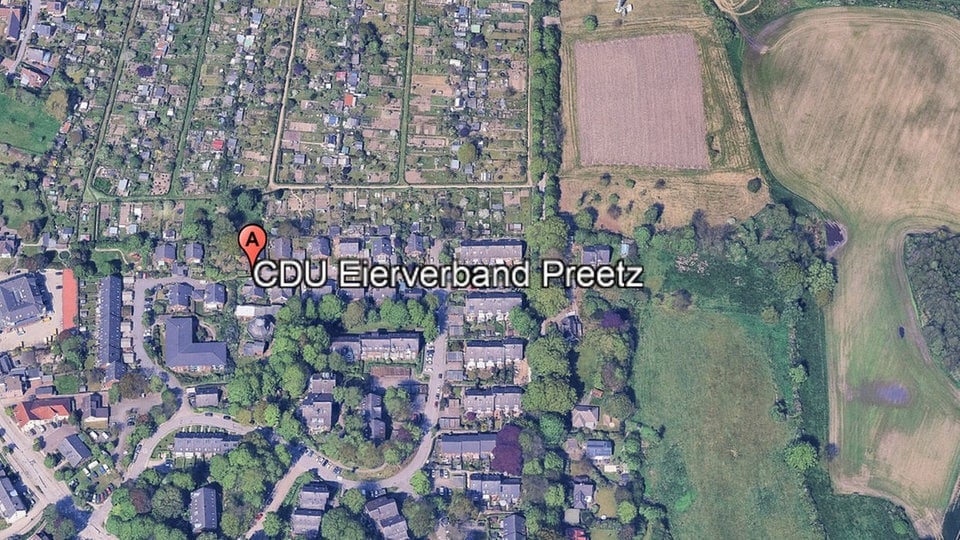
The digital prank unfolded across several German states, primarily in Sachsen, Sachsen-Anhalt, and Thüringen, but with reported instances extending to Berlin and other regions. Users searching for legitimate CDU and CSU business listings on Google Maps were met with an unexpected surprise: instead of "CDU Geschäftsstelle [Location]," they found entries like "Eierhaus," "Eierladen," or more specific variations such as "CDU Eierverband" for the Eisleben office, and "rehbraunes Eierhaus" (reddish-brown egg house) for a Nordsachsen district association. Even the state parliament building in Dresden briefly appeared under a new, unofficial name.
This wave of alterations transformed official party locations into objects of digital amusement and public discussion. For example, the CDU office in Erfurt was rebranded as "Eierladen," while in Eisleben, the change was to "Eierverband." The seemingly innocuous yet absurd nature of the new names immediately drew attention, spreading rapidly across social media platforms and news outlets. This widespread `cdu geschäftsstelle umbenannt` action demonstrated a clever, albeit unauthorized, use of digital tools to make a political statement. The uniformity of the "egg-related" theme, despite slight variations, strongly suggested a coordinated effort rather than isolated acts of digital vandalism. The swiftness with which the changes appeared and were then, in some cases, reversed, highlighted both the initial vulnerability and Google's eventual, albeit delayed, response to correct the misinformation.
Unmasking the Motive: Who Was Behind the Google Maps Sabotage?
While the precise identities of all perpetrators remain unclear, a prominent activist operating under the alias "saftsackbeats" claimed responsibility for initiating and coordinating the `cdu geschäftsstelle umbenannt` campaign. Through posts on platforms like Instagram and Threads, the individual asserted that the action was a deliberate protest against the Union, expressing hope that it would "at least provoke a small smile in these dark times." This statement positions the "Eierhaus" renaming as a form of digital civil disobedience, aiming to generate public discourse and perhaps even a degree of ridicule, rather than causing direct physical damage.
The timing and nature of the protest also suggest potential connections to broader political sentiments and past incidents. Notably, the media reported on a previous event where an 18-year-old student displayed a sign reading "Merz leck Eier" (Merz lick eggs) at a student demonstration in Berlin, leading to a police investigation for alleged defamation against CDU chairman Friedrich Merz. While there's no direct confirmed link between this student and the Google Maps renaming, the use of "Eier" in a critical context against the CDU leader suggests a possible inspiration or a shared lexicon of protest among certain groups. This connection implies a deeper, ongoing dissatisfaction with the CDU's policies or leadership, manifesting in creative and attention-grabbing ways within the digital sphere. The incident thus moved beyond a mere prank, hinting at underlying political tensions and an emerging trend of digitally-driven activism. For a deeper dive into the protest's context, read about
The 'Eierhaus' Affair: Decoding the Google Maps Protest Against CDU.
Google Maps' Achilles' Heel: Exploiting User-Generated Content
The "Eierhaus" incident serves as a powerful illustration of the inherent vulnerabilities within platforms heavily reliant on user-generated content, such as Google Maps. The platform's strength lies in its collaborative nature, allowing millions of users to contribute to its vast database through features like "Karte bearbeiten" (edit map), suggesting changes to business names, addresses, opening hours, and more. This crowdsourced approach typically ensures a dynamic and up-to-date mapping service. However, it also presents an Achilles' heel.
Initially, many of these user-suggested edits are processed automatically or with minimal human oversight, especially when the volume of suggested changes is high or when multiple users submit similar alterations. This automated approval process, while efficient for legitimate updates, creates an opening for malicious or mischievous actors. In the case of the `cdu geschäftsstelle umbenannt` phenomenon, it appears that a coordinated effort led to multiple suggestions for renaming various CDU/CSU offices, which Google Maps' automated systems initially accepted and published. The system likely interpreted these repeated suggestions as legitimate updates from a community of users, rather than a concerted attack. This reliance on trust and automation, without immediate robust manual verification for certain types of edits, allowed the prank to proliferate rapidly before being detected and reversed. The incident highlights the delicate balance Google and similar platforms must maintain between fostering user contributions and safeguarding against manipulation and misinformation.
The Repercussions and Reactions: More Than Just a Joke?
The reactions to the "Eierhaus" renaming were, as expected, diverse. Within the CDU itself, responses ranged from outright condemnation to a more relaxed, dismissive stance. Pressesprecherin Andrea Ostheer of the CDU-Landesverband Sachsen-Anhalt, for instance, downplayed the incident, stating that the party was focused on the upcoming state elections. This pragmatic approach aimed to minimize the perceived impact and avoid giving further publicity to the perpetrators. Other party members, however, likely viewed it as a disrespectful act of digital vandalism, undermining their professional image and potentially confusing constituents.
Public reaction was also varied. Many found the prank amusing, sharing screenshots and memes across social media, effectively amplifying the protest's reach. For them, it was a harmless, creative way to express dissent or simply enjoy a moment of political satire. Others, however, saw it as an illegitimate form of protest, arguing that such actions contribute to an erosion of respect for political institutions and could set a dangerous precedent for online misinformation. Beyond the immediate humor or annoyance, the incident sparked important discussions about the ethics of digital activism, the boundaries of free expression online, and the responsibility of platform providers to ensure the accuracy and integrity of the information they host. It underscored that while the physical presence of a political office remains unchanged, its digital representation carries significant weight in the modern era.
Protecting Your Business: Lessons from the 'Eierhaus' Incident
The "Eierhaus" affair offers crucial lessons for any business, organization, or public entity regarding their digital presence, especially on platforms like Google Maps.
*
Proactive Monitoring is Key: Don't wait for a crisis. Regularly check your official listings on Google Maps and other relevant online directories. Set up Google Alerts for your business name and related terms to catch mentions and potential anomalies early.
*
Claim and Verify Your Listings: Ensure you have claimed and fully verified your Google My Business profile. This gives you greater control over your information and allows you to respond quickly to incorrect changes.
*
Educate Your Team: Have a clear protocol for who manages your online listings and how to respond to unauthorized changes or negative reviews.
*
Report and Escalate Quickly: If you discover incorrect information, use Google Maps' "Suggest an edit" or "Report a problem" features to submit corrections immediately. If the issue persists or is widespread, escalate it through Google My Business support channels.
*
Build a Strong Online Reputation: A robust, positive online presence with numerous legitimate reviews and accurate information can help dilute the impact of isolated malicious acts.
*
Understand Platform Mechanisms: Familiarize yourself with how platforms like Google Maps handle user contributions and dispute resolution. Knowledge is power when dealing with online challenges.
*
Backup Your Information: Keep a record of your official business information (names, addresses, phone numbers, websites) so you can easily verify and restore correct details if necessary.
In an increasingly digital world, a brand's or organization's online representation is as critical as its physical one. The "Eierhaus" incident is a potent reminder that digital vulnerabilities can be exploited, and a proactive, vigilant approach is essential for maintaining control over your digital identity.
The "Eierhaus" renaming on Google Maps stands as a memorable case study in digital activism, exposing the intricate interplay between user-generated content, platform vulnerabilities, and political expression. While humorous to many, it highlighted the serious implications for online reputation and the integrity of digital information. For both political entities and businesses alike, the incident underscored the critical importance of vigilant digital presence management and the ongoing challenge of maintaining accuracy in a world shaped by collective online action.