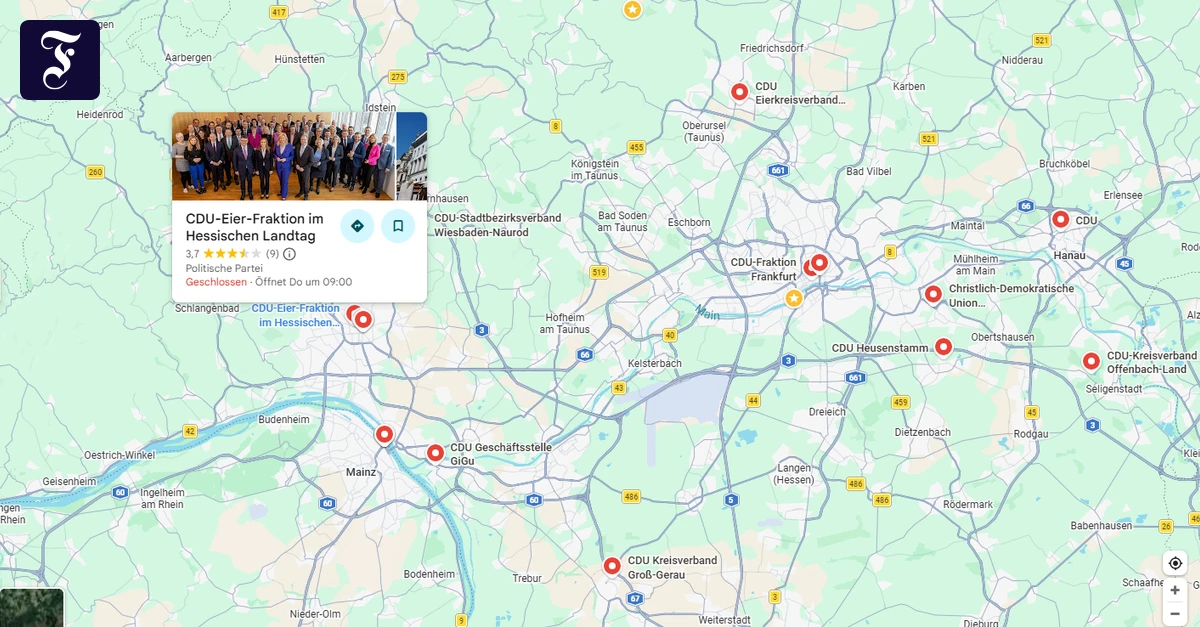
In an unexpected twist of digital defiance, numerous CDU (Christian Democratic Union) party offices across Germany found their official designations on Google Maps playfully — and provocatively — altered. For a period, searching for a CDU Geschäftsstelle might have led users not to their standard party headquarters, but to an entry hilariously rebranded as "Eierhaus" (Egg House) or "Eierladen" (Egg Shop). This nationwide stunt, quickly dubbed the 'Eierhaus affair,' represents a fascinating convergence of political protest, digital activism, and the vulnerabilities of user-generated content platforms.
The 'Eierhaus' Phenomenon: A Digital Barrage Against CDU
The digital renaming campaign primarily targeted CDU and CSU (Christian Social Union) offices, with locations spanning several German states. From Saxony to Thuringia, and Sachsen-Anhalt to Berlin, political headquarters were temporarily stripped of their official titles and given new, rather suggestive, monikers. The most prevalent change saw various party centers, including prominent ones like the state parliament in Dresden, appearing as "Eierhaus" on the popular mapping service.
However, the pranksters didn't stop at just one term. Creativity abounded, with regional variations adding a layer of absurdity. In Erfurt, a CDU office became an "Eierladen," while in Eisleben, it was humorously listed as "CDU Eierverband" (CDU Egg Association). The district association office in Nordsachsen briefly appeared as a "rehbraunes Eierhaus" (fawn-brown Egg House) before being swiftly corrected. These diverse, yet thematically linked, rebrandings underscore a coordinated effort to inject a dose of digital satire into the political landscape, making the phrase cdu geschäftsstelle umbenannt a trending, if informal, topic of conversation across the country.
Unmasking the Motive: From Satire to Serious Statement
While the initial reaction to the "Eierhaus" renaming ranged from amusement to concern, it quickly became clear that this was no random act. The incident was widely interpreted as a protest wave, leveraging digital platforms to express political dissent.
The Voices Behind the 'Eierhaus'
The alleged architect behind this widespread digital alteration is an activist operating under the pseudonym "saftsackbeats." Taking to platforms like Instagram and Threads, the individual claimed responsibility for the action, stating an intention to spark a "small smile" amidst what they described as "dark times" and to register a protest against the Union parties. This act of digital civil disobedience highlights a growing trend where online spaces become battlegrounds for ideological expression, often blurring the lines between humor and direct political criticism.
The "Merz leck Eier" Connection: A Glimpse into the Provocation
To fully grasp the provocative nature of "Eierhaus" and its variations, it's crucial to understand a preceding incident that likely inspired the choice of terminology. In early March, at a student demonstration in Berlin, an 18-year-old protester held a sign emblazoned with the phrase "Merz leck Eier" (Merz, lick eggs). This direct and crude taunt, aimed at CDU leader Friedrich Merz, led to a police investigation into the young man for alleged defamation. The subsequent Google Maps renaming, using a similar "egg" theme, is therefore not arbitrary. It appears to be a deliberate, albeit coded, echo of that earlier, more explicit insult, amplifying the message and potentially circumventing direct legal repercussions while still conveying a strong, derogatory sentiment towards the CDU leadership. The choice to target cdu geschäftsstelle umbenannt with this specific word was a clear strategic move.
How it Happened: The Google Maps Vulnerability Exposed
The ease with which numerous official CDU listings could be altered raised questions about the security and verification processes of Google Maps. This incident starkly illustrates a particular vulnerability inherent in platforms that rely on user contributions for their data integrity.
Google Maps operates on a collaborative model, allowing users to propose edits to location information, including business names, addresses, and other details, through a feature commonly known as "Edit map." While this crowdsourcing approach generally helps keep maps updated and accurate, it also creates an opening for malicious or mischievous actors. In this instance, it appears Google's automated systems initially accepted a significant number of these renaming suggestions without immediate, stringent manual review. This allowed the "Eierhaus" and similar labels to propagate rapidly across various CDU offices before Google's moderators could intervene.
The incident serves as a critical case study for understanding platform vulnerabilities in the age of user-generated content. For a deeper dive into the technical aspects and implications of such exploits, you might find our article Google Maps Vulnerability: How 'Eierhaus' Renamed CDU Offices particularly insightful. It's a testament to how seemingly benign online features can be repurposed for protest, creating a temporary, yet impactful, disruption to official online presences. The swift, widespread nature of the cdu geschäftsstelle umbenannt campaign underscored this vulnerability.
The Fallout and Future: Reactions, Implications, and Lessons Learned
The 'Eierhaus' affair generated a variety of responses, prompting discussions on digital ethics, political satire, and online reputation management.
Political Reactions and Public Discourse
Official reactions from the CDU were largely understated, perhaps to avoid giving further oxygen to the protest. The CDU state association in Sachsen-Anhalt, for instance, downplayed the incident, stating their focus remained on the upcoming state elections. The CDU parliamentary group in Dresden opted not to comment officially. This measured approach suggests a tactical decision to not legitimize the prank by engaging with it directly, yet the widespread reporting ensured the message still reached a broad audience.
Public reactions, however, were more diverse. While some found the renaming humorous and a clever form of protest, others viewed it as an irresponsible act of digital vandalism or even a form of online harassment. The incident reignited debates about the boundaries of free speech in digital spaces, the difference between satire and defamation, and the potential impact of such actions on political discourse.
Safeguarding Online Presence: Tips for Organizations
The 'Eierhaus' incident offers valuable lessons for any organization, political or otherwise, on managing their digital footprint:
- Claim and Verify Your Listings: Ensure your official Google My Business profiles are claimed, verified, and regularly updated. This gives you more control over your information.
- Proactive Monitoring: Regularly monitor your online listings on Google Maps and other platforms. Set up alerts for any unauthorized changes to your business name, address, or contact information.
- Swift Reporting: If unauthorized changes occur, report them immediately to the platform provider. Google Maps, for example, has mechanisms for reporting incorrect information.
- Engage with Your Online Community: Foster a positive online presence to create a buffer against malicious attacks. Respond to reviews and maintain accurate information.
- Understand Platform Policies: Familiarize yourself with the terms of service and editing policies of major platforms to better understand how to protect your listings and what recourse you have.
The Evolving Landscape of Digital Protest
The 'Eierhaus' affair is a vivid illustration of the evolving nature of political protest in the digital age. It demonstrates how activists can leverage widely used, everyday platforms to achieve broad visibility for their message, often with minimal resources. These actions, while sometimes ephemeral, can generate significant media attention and spark public conversation, even when the targeted organizations choose to remain silent. The incident also highlights the tension between open, user-driven platforms and the need for accurate, reliable information, especially concerning official entities. For a deeper examination of this form of digital activism, refer to our comprehensive analysis: The 'Eierhaus' Affair: Decoding the Google Maps Protest Against CDU.
Ultimately, the renaming of CDU Geschäftsstelle umbenannt as 'Eierhaus' on Google Maps transcends a simple prank. It serves as a potent reminder of the power of digital tools in shaping narratives, challenging authorities, and sparking public dialogue, all while posing complex questions about online moderation, corporate responsibility, and the future of political engagement in a hyper-connected world.